Thursday, February 1, 2018

So you signed your solar agreement

Our exploration to go solar started mid 2017. After a full investigation we finally settled on the company Yellowlite and signed our purchase agreement on November 21st, 2017. When purchasing such an important and expensive investment, you always have a standard 3 days to change your mind and back out of a signed contract. We obviously stayed the course and literally just finished our solar panel install on February 1, 2018. Little did we know that the install would take until the new year...

After signing the contract at the agreed upon price our sales representative took pictures if our electrical box and utility meters. We discussed where the panels and meters would be installed and agreed upon specifications. Our system would be 24 Silfab 310 watt premium panels, located on the south facing side of our roof. Meters would be installed near the current utility meters. The specifications were sent over to the design team who put together the design that was sent over for customer approval. We denied the first design because we requested a satellite to be removed and the solar panel wiring to run along the gutter rather than down the middle of the house. The design had to be amended and then approved before submitting to apply for city permits and DTE approval. Shots of the approved design are shown and were submitted for permit approval along with full specifications.


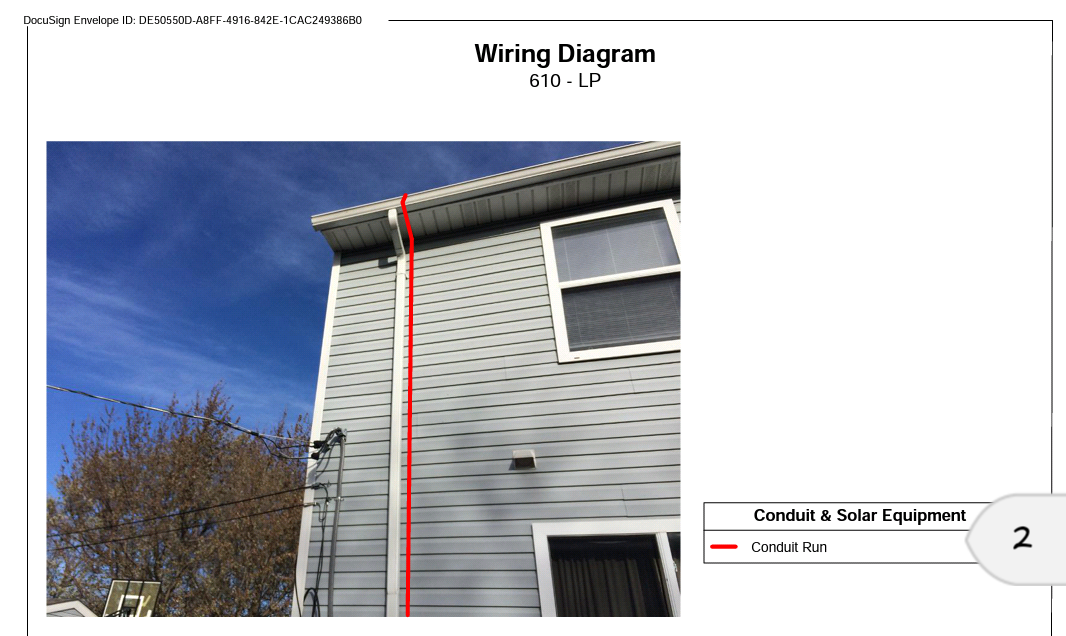


After we approved the design, the first thing that held up progress was our permits. Yellowlite was all inclusive for us and the permits costs were included in the purchase cost. The city permits went through rather smoothly even with the Christmas and New Year holiday. However, the DTE permits caused some problems. On our behalf, Yellowlite manually filled out permit paperwork, submitted design, wrote a check and mailed everything to DTE. A couple weeks later, I get a call from DTE stating that they no longer accept manual paperwork and that solar applications need to be submitted electronically. I call DTE to get clarification on what was needed and then followed up with my Yellowlite Interconnection Coordinator. I was sent the design plans to submit electronically via the DTE website solar permit application and had to fill out specific information Yellowlite provided to me. Once the application was complete, I had to email copies to my coordinator along with a one page permit payment stub for Yellowlite to send in the permit fee. At that point we thought it was just a brief wait for approval. By this time we are into the first week of January and the very cold temps. I was informed that panel install could only occur when temperatures were above 30°F but we were still waiting on DTE permits. Another 10 days go by and I receive another call from DTE saying they couldn't process my application. This is because they had both a manual and electronic application with two checks and they can't proceed until they know what check to cash. I had to call Yellowlite again to follow up. This took just a couple of days and we were finally approved then it was a wait on the weather...

On January 29, 2018 I got the call they wanted to schedule this week, weather permitting, and we would be contacted by our sub-contracted installer Strawberry Solar. The next day the installer called and scheduled a 10 am start on January 31st and continue through February 1st. They showed up as planned albeit about an hour late and began install. Rails were installed and wiring ran. The next day panels were installed and the electrician came to install the bidirectional meter and connect to the electrical panel. Now we wait for the city inspector and the DTE inspection and for the panels to be turned on. We also have to get instructions on the monitoring application and then we will be good to go! Here are some photos of the install...


Tuesday, January 30, 2018

Net Metering and feeding back to the grid

After weeks of barely any progress waiting on permits and red tape we are finally starting install tomorrow, January 31st! Only 2.5 months after signing on our system! The vendor Yellowlite sub-contracted the install to a local vendor, Strawberry Solar, and things get underway at 10 am. Install will be completed by Thursday but then we must wait on city electrical inspection and DTE inspection before our production will be underway... In the meantime on to my next blog post.

Image courtesy of CPI:

Most states have laws governing solar panels and power production. Utility providers have goals to meet in providing clean energy. One of the ways they do so is allowing customers to purchase solar panel systems and feed energy back to the grid. This benefits the utility company in three ways:

1) It takes the investment in the panels away from the utility company and puts it on the customer.
2) The clean energy produced by your solar panels counts towards the utility companies clean energy goal.
3) Any excess energy produced cannot be carried over year to year. 

The laws in place governing solar energy are not friendly to private citizens that produce electricity and, for the most part, favor the utility companies. In Michigan if you are already connected to a utility company that provides electric, you cannot disconnect from the company and produce your power 100%. You also cannot utilize a battery backup to store excess energy as it must be fed back to the grid. The system to credit this energy production on your electric bill has been labeled Net Metering and this is the method the majority of states have adopted. Net Metering as shown in the graphic uses a bi-directional meter to count the watts your solar panels produce and the watts your home uses. It then credits the excess energy sent to the grid on your energy bill. Your electric bill will only charge you for the watts used over your solar energy production.

DTE and other electric providers will not let you install a system that is estimated to over produce your average annual usage. This is because they do not want excess production and the system is set up so that DTE wipes your energy credits clean at the start of the new year. So over producing is not necessarily advantageous to you and it would mostly benefit your electric company because they get free energy from your system. Potentially, at the end of the year, before the credits are wiped, if you have a credit of excess production you can call and request a cash out. I have not tried this so I can neither confirm or deny this claim but I will hopefully be able to eventually verify this once my panels are installed. 

To be completely off the grid you must build a new home that has never been connected to a utility company. This would not apply to a tear down and rebuild but it would apply to a lot that was split with an old home and a new home, with new service. The new home would be able to be off the grid by purchasing a solar system with a battery backup. The battery systems that come with solar panels are quite expensive and once the life of the battery is up they must be disposed of. The bright side of adding solar after already having an electric utility provider is that the large battery investment is not needed and there is no need to eventually worry about battery disposal.

Another question might be what happens when there is a power outage? Unfortunately, without a battery system when the grid goes down your solar production will continue but will cease to be Net Metered to prevent damage to the grid and the power will still go out. There are small battery backup systems that can be used to store your power and prevent a power outage at your home. These systems are allowed to work with a grid connected home solar system. In the event of a power outage you would flip a manual switch to allow your system to begin sending power to the battery backup system that can keep your home powered for a short period of time. However, such a system would need to be started during daylight hours and have active energy production to prevent having the power out. The cost of this setup would far outweigh the cost of a generator for use in such times.

After reading all this you might think "why go solar?" Obviously the number 1 reason is that it is the green thing to do and an excellent step in reducing your households carbon footprint. Another reason is that Net Metering looks at 1 watt of energy production as 1 watt of energy production. This correlation will not change over the 25 plus life span of your solar energy system. In Michigan electric costs are currently 15.7 cents per watt in 2017 up from 12.11 cents per watt in 2011. This is roughly a 29% increase in 6 years or approximately 4.9% increase per year. If this trend continues a solar system will provide an excellent return on investment as the value of energy produced would not be subject to the price increase on electric. Personally, for my household the cost of going solar will not cost more than my monthly electric bill. After the 30% federal tax reduction for going solar the loan payment will be equal to what we would pay in electric costs. If electric rates continue to increase, we will see a monthly payment reduction. In 11 years the solar system will be paid off and there will still be 14 plus years of use left to the system. At that point our electric bill will be 80% or less than it would be without solar panels at that point it is pure return on investment. Another point to mention is that solar panels are an investment in your home no matter if you plan to live there 2 years or 50 years. The research I found regarding home value after solar panel install notes that a homes value will increase 10 to 15 times the annual savings on your electric bill. So if a solar system saves $1000 per year on the electric bill you can expect the home value to increase approximately $10,000. Not a bad investment for producing clean energy!

Solar power is a household decision and can be catered to fit all needs, budgets and uses. Personally, I would hope that everyone would want to go solar. I am blogging about it in hopes of getting the word out with our experience on solar and possibly encourage those thinking about it to go for it. I did create an excel file, that after entering pertinent information, can help you estimate money savings over the life of a solar system. If I can I will try to add the spreadsheet with instructions for download. More to follow on that...


Friday, January 26, 2018

Sizing your Solar System


When calculating the size of your system it is important to know how much power your system is anticipated to generate. The PV Watts link below helps to determine how much power you can expect to generate using the exact location and orientation of where you plan to put the solar array.


Here you enter your address, the kilowatt size of your system and anticipated power reduction factors. In any solar array the best possible setup would a south facing roof with a 34° pitch with no shading. This will allow your array to provide maximum output, weather permitting of course. In the PV Watts site the reduction factors account for the soiling, shade, roof pitch or array angle, electrical losses (leave these at default) and the Azimuth or the direction the array will face. The PV Watts site has information that help you determine your reduction factors and it is very user friendly. It is even not too bad to access from a mobile device but much easier to navigate on a laptop or desktop computer. 

In the photo above it helps to explain how to calculate system size. For our system we  are getting 24 Silfab premium 310 Watt solar panels. They will be mounted on the South facing (180°) roof with an approximate 30°-35° pitch, the roof is never shaded by trees. The PV Watts website allows for a number of variables that affect power generation. A premium panel has a higher efficiency than a standard panel and this refers to how efficient a panel is at converting sunlight to energy under standard operating conditions. The data sheets for solar panels will provide all pertinent information about the panel, including the standard operating range. In the midwest soiling is rarely a factor due to frequent rain so set this to 0 for Michigan. To get system size we take 24 panels times 310 watts each, totaling 7440 Watts. For our 7440 Watt array, using the PV Watts calculator we can anticipate approximately 10,500 watts production per year. This obviously depends on weather and can vary slightly higher or lower. Based on our consumption of 980 watts per month we will cover roughly 90% of our 11,772 Watts yearly energy needs. Now if we account for the reduced consumption of 939 Watts since we have winterized our hot tub we have now bumped up to just over 93% of our energy needs. 

Higher wattage systems cost less per watt. As we progressed through our investigation of solar panels we received quotes from several vendors. With each vendor we provided our monthly usage of 980 watts. The first vendor offered 20 Solar World 290 watt standard panels totalling a 5800 watt system. The annual production would have been roughly 8000 watts or just about 70% of our annual usage.  This system was quoted at $5.24 per watt. Another vendor quoted 31 JinkoSolar 295 watt premium panels totalling 9145 watts that would cover about 98% of our energy needs. This system was $2.82 per watt. The system we are getting is 24 Canadian made Silfab premium 310 watt panels totalling 7440 watts at $3.07 per watt. Less panels and lower wattage raised the cost per watt. I found it interesting that each vendor varied the system size starting with the same monthly usage.

It is important to remember that solar arrays can be as few as 1 panel to even larger than 24 panels. How many used depends on your electric usage, how much of your electric needs you want to cover and your budget. There are many different panel manufacturers and various panel wattage's available so finding an arrangement to best fit your needs is easy. No matter how many solar panels you decide on, your system will help you save money and the environment!

NOTE: Without using PV Watts a quick rough estimate of system production would be to take system size and divide it by 70% or 0.7. This gives you a ball park figure to work with. The ideal and most accurate way to determine your system production is to use the PV Watts website or another similar site that takes into account all the factors discussed.

Thursday, January 25, 2018

Calculating your Energy Needs

I apologize for taking a hiatus over the holidays, but the solar process is slow going. After signing in November we finally anticipate install to start sometime in February. We have already made our first payments and anticipate claiming the tax credit when we file our taxes this year. As soon as all the permits are finalized we schedule install, mother nature willing since we need temperatures above 30 degrees to install panels on the roof. My blog will go into detail on the process in order and the full timing but for now first things first...

This post and the post to follow will be the not so fun posts involving math but essential steps to get your solar system in place to start saving money and the environment.

Photo compliments of Everblue Training Institute.

One of the first things you should do when you begin researching solar energy is to calculate your energy needs so that you can right size your solar system.  To calculate the size of system needed you must know your average electric use over the past 12 months. This will give you the most accurate consumption for your family. To find this information I went through my electric bills. The graph attached was found in a DTE electric bill.  It details 12 months of average daily electric use in kilowatt hours. To find out monthly usage you have to multiply the average daily use by the number of days in that month. For example this November we used 30.3 average wattage per day. To find Novembers monthly usage you must multiply 30.3 watts/day * 30 days in November which totalled 909 watts used in November. To get the average monthly usage for the last year you caculate the average monthly usage for each month for the past 12 months. Then you add them all up and then divide by 12. Our average monthly usage is 980 watts per month and our yearly usage is approximately 11,772 watts per year.

There are a number of variables that will effect your energy use and production. One that has changed ours is the fact that last winter we ran our electric hot tub all winter, this year we winterized it. While waiting on our panel install I recalculated our energy use not running the hot tub this year in October, November and December so far our average monthly use decreased 31 watts! This changes our yearly use to 11,352 watts. This will actually cause our rated system to cover more of our energy needs... precisely 3% more than we anticipated and winter isn't over yet.

My next post I will talk about panel size and how to take the monthly and yearly usage that was calculated and determine your system size. This will include the discussion of electric providers, laws and regulations regarding solar panel installation. Believe me there is more to it than I ever imagined!

Photo compliments of us.sunpower.com

Monday, November 27, 2017

Solar Investigation


Solar is overwhelming. I just have to put that out there... Frankly, there is a lot to learn about solar energy and our journey began with our energy assessment. I can honestly say after the assessment I wasn't sure where to go for information since we don't know anyone that has solar panels. Initially, I did a search online and a site popped up to input contact information to recieve follow up. From that one inquiry, I received one call back from a company called Power Home. Because we wanted to learn more I set up an appointment for early October for a morning both my husband and I would be home. The consultation is scheduled at your home so that specifics of solar power to your household can be discussed. Unfortunately they cancelled and we had rescheduled for the third week of October and I was the only one available for the consultation.

The day finally came for our appointment and I admit I didn't do much research in advance despite having to reschedule and having two extra weeks. One thing they did ask for and I had ready was the average KWH used per month averaged out over the last year. I did calculate the average per day using the values shown in the attached photo. Our average electric KWH total per month was 981. I went into the meeting willing to learn all I could so that I could review everything with my husband and we could make the decision on going solar together. The Power Home representative was very nice and informative. Power  Home does include plenty of extras in their price which is great if you need them. Attic insulation, LED lights, hot water heater insulation and a nest thermostat are included and all things we already had. Basement insulation, something we need, would have been amazing addition but unfortunately it wasn't part of the Power Home package. During his presentation we discussed many things but there was no talk of price. I don't know about you, but a delay in discussing price always raises a big concern with me. In this instance my concern proved to be right. The overall price made my jaw drop... this system was on the higher end of pricing at $5.24 per watt. Now granted, the price would be reduced by the federal tax credit but the overall price was still high and only produced 80% of our anticipated electric use. They also used American/German made Solar World panels which having a product American made or at the very least North American made is something we were very interested in supporting. We also discussed net metering and how it will work with DTE, our service provider. Once the pitch was done, then came the pressure to commit. "If you sign today we will give you a free panel reducing the price by $1500.00". I had to refuse his persistence because 1) I still needed to talk to my husband and 2) I don't react well to high pressure sales tactics wanting me to sign immediately before leaving our house. I parted ways with the Power Home sales representative on good terms but not signing anything. It reaffirmed my  determination to research solar power and determine what is best for our household.

After the consultation, I found that I had so many questions and kept in contact with the representative asking questions and getting links and things to help me with my research. After only one consult I knew I needed additional quotes or even additional consultations so I went back to looking for other companies. Luckily, I stumbled across a website that became an unbiased source for me to turn to called Energy Sage. This website allows you to create a profile and input information specific to your household so that you can get multiple quotes from solar power vendors. It took about 3-4 days and I got one more quote from Michigan Solar Solutions this quote was 1/2 the cost of the first and used Chinese panels. The panels wer 295 watts and cost per watt was $2.85. This vendor also had delays in install dates due to the panels coming from overseas. At about day six I received a third quote from YellowLite. It was a middle of the road quote and consulting with Energy Sage really helped me determine what my needs were. I talked to an Energy Sage representative multiple times regarding questions I had as well as talked to Yellowlite representatives regarding the system specifics. The information I gathered from these people matched information I gathered on my own. Yellowlite originally quoted me with Solar World panels at 300 watts. Ultimately after some negotiation, yes you can negotiate your price with solar vendors, we settled on a 310 watt Canadian Silfab solar panel. The Solar World panels were sold out until 2018 and we did not want to wait that long to install. Plus we liked the addition of 10 watts per panel. And our negotiated price of $3.07 per watt we felt was a great price to go solar based on our home assessment. It was also a good fit for our space and needs. There are other factors including labor warranty, panel warranty, size of panel, operating temperatures and performance decline to consider but this will be discussed in another post. Overall, Energy Sage made it easy to see quotes and price in advance. Also Energy Sage representatives were helpful in identifying and confirming information about going solar. They were always available when I needed them. A definite win-win in my book!

My next blog post will talk about calculating your energy needs - something important to do before solar shopping, net metering and how it works.

Link to Energy Sage

https://www.energysage.com

Friday, November 24, 2017

Energy Assessments


As I begin our story of why we went solar it is important to tell you a little bit about our family. We are a family of 4 (myself, Josh, Sethe and Ethan). We purchased our home in September 2013 and have just celebrated our 4th year living here in Berkley, Michigan. Berkley is amazing and we love the city, our home and the friends we have made here. In our family I would have to say I am the most green as indicated by the fact that I am the one "garbage picking" items from our trash that should actually be in our recycle bin. Pre-large recycle bins we had 4 small bins and our neighbors joked that we recycle so much that they didn't have to. Even now we still use the small bins when we fill our large recycle bin. Personally, I always try to avoid running water, leaving lights on, have a composter and just recently purchased rain barrels. Despite the fact that we do a lot to try and be green there are still many ways we can improve. We are trying to improve our carbon footprint and we are trying to teach our children to be more energy conscious as well.

Our home was constructed in 2007, however it was constructed on top of the existing basement. So the upper part of our home and crawlspace was built in 2007 but our 600 sq foot half basement was built roughly around the 1960's. Overall, our home is 2300 sq feet with 12 rooms total, 4 bedrooms and 2.5 baths. Earlier this year we had a consumers energy assessment and identified some areas in the basement where we can add insulation and add pipe insulation to become more efficient. Another area to seal is around our entry doors. Inadequate insulation in the basement is part of the reason why our upstairs remains toasty warm and the downstairs stays roughly 5 degrees or so cooler. We already have energy star appliances, have changed out most bulbs to LED (maybe a handful remain) and installed a Nest thermostat in March of this year. Amazingly enough we have seen improvement on our electric bills due to these efforts. Ultimately, we used 6% less energy than last year according to recent DTE energy reports and this has helped keep our budget plan payment flat between last year and this year despite electricity rates increasing.

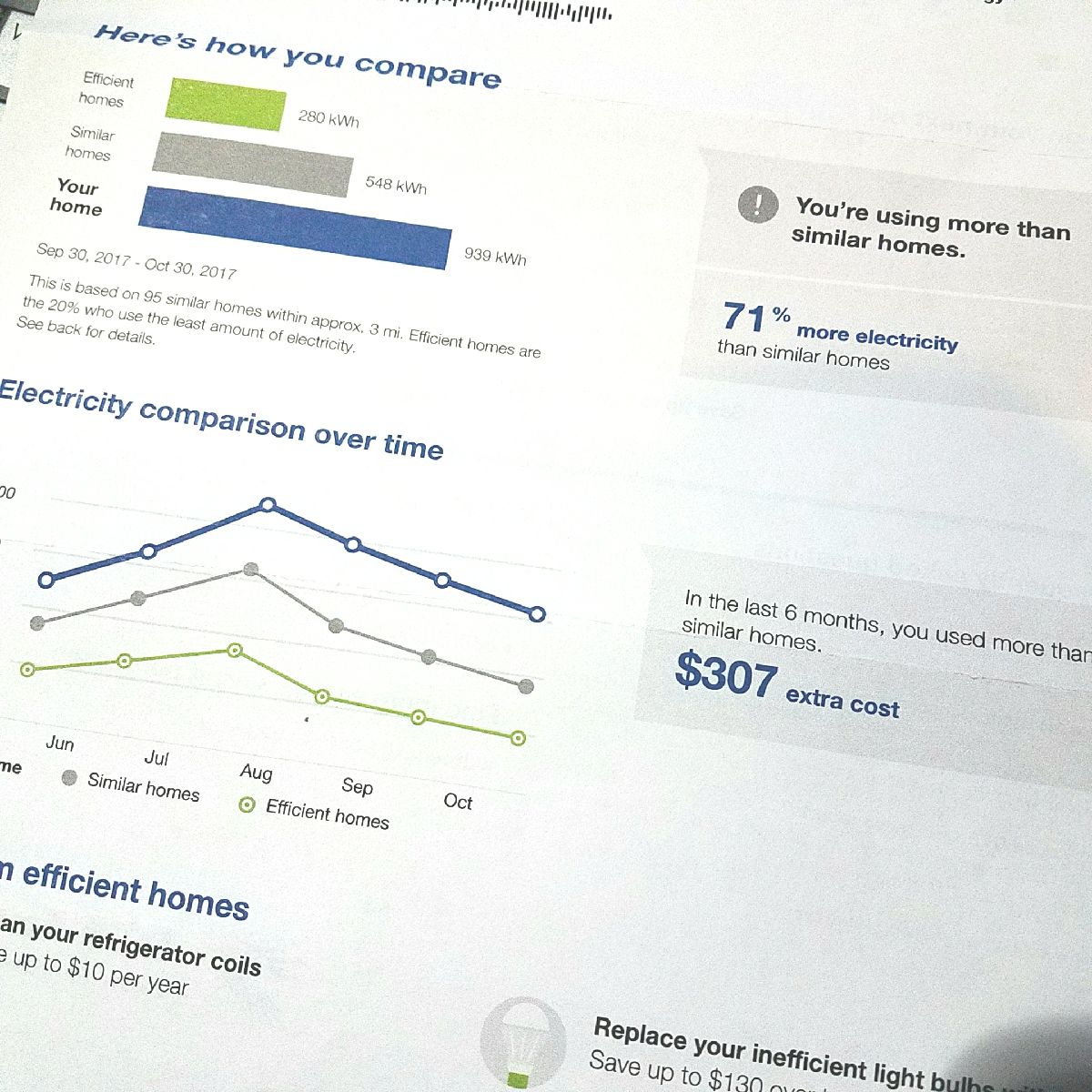
The realization that we need to do something about our power consumption comes once or twice a year via mail when we get our energy tally from DTE. It tells us "mayday, mayday your home is burning electricity! It uses more energy than 100% of homes of similiar size!" I'm exaggerating a bit but the letter kinda feels like it is saying that. Our most recent letter is attached in the photo. Despite our best efforts this statement tells us we need to do better and continue to make changes to reduce our energy consumption. Truth be told we are doing things a bit backwards...getting solar power first and eventually the basement insulation. The insulation will also help lower the heating bill win-win. Definitely something to complete in the near future.

Our solar power decision was ultimately because of our energy assessment. This set us on the path of investigating ways to reduce energy consumption and become more eco-friendly all around.

Energy assessments are important...both DTE and Consumers Energy will do either a free or low cost assessment about your homes energy consumption. They install basic low flow shower heads and sink flow limiters. They also provide some LED lights and 12 feet of pipe insulation. We found this assessment to be very helpful and keep our assessment handy and have been working on optimizing areas of recommendation. I highly recommend everyone take advantage of this program to begin your journey to make your home more eco friendly. Below you can find the links to both DTE and the Consumers Energy assessment programs. A customer can use both assessments as needed to achieve a balanced energy assessment.

Another product I highly recommend everyone install is a smart wifi thermostat. There are a number of these out there at varying price points. Just be sure to investigate and read reviews to choose the best one for your family. We chose the Nest thermostat. Honestly, I credit our Nest thermostat for a good portion of our decreasing energy and gas bill. The Nest thermostat was easy to install but it doesn't work with all heating and cooling systems. You can tell if your thermostat is compatible if it has 3 wires labeled A, B, C. If you only have 2 wires or they are labeled with numbers you have a proprietary system and these are not compatible with the Nest theemostat. On the bright side if your system is compatible and you purchase a wifi thermostat be sure to check for rebates/incentives with your utility provider. We got $50 cash back from DTE for purchasing ours.

Now that you know a bit of background  on us and our home I will jump into solar investigations next time.

DTE and Consumers Energy assessment links. Copy and paste to your browser if link does not work.

https://newlook.dteenergy.com/wps/wcm/connect/dte-web/home/save-energy/residential/incentives+and+programs/home-energy-consultation?gclid=CjwKCAiAo9_QBRACEiwASknDwWn022ziqWj8zPB5yyhbTVUKa9XtENtKcLir3u6eLTLBmIfSiixiKhoC19oQAvD_BwE

https://www.consumersenergy.com/residential/save-money-and-energy/assessments/home-performance?utm_source=google&utm_medium=search&utm_campaign=Energy%20Efficiency%7CICF%20HPwES%7CSearch

Wednesday, November 22, 2017

So this happened...Photovoltaic System aka Solar Panels!


I know I don't post much but I've decided to commit to blogging more in particular you will begin seeing a lot of posts and information regarding our choice to go solar. So if you already follow me you will see some of my foodie posts along with our progress on our solar panel install with the amazing vendor Yellowlite! After a couple of months deliberation we took the plunge and signed our purchase agreement on November 21, 2017. Our install is coming in December before then I will blog about our families thought processes and choices for taking this huge leap in going green. I will provide you with helpful sites and information that will help you in your decision to take the plunge as well. I am by no means a subject matter expert but I will tell you I have done my research and will provide you with truthful information from my experience! Stay tuned...

Mid-Michigan homeowner,

Lisa Pollard